


The Tatum Chronicles by D.G. “Chip” Tatum opens with a soldier’s journey into the covert machinery of U.S. intelligence and ends in a defiant exposé of government-sanctioned drug trafficking, assassination operations, and political corruption. Tatum, once a decorated combat controller and pilot, charts his progression from elite military service to deep-state operative under the CIA’s Pegasus unit. His firsthand revelations confront entrenched narratives about the Iran-Contra affair, implicating key American political figures in operations that moved cocaine through Central America to fund guerrilla armies and covert agendas.
From Vietnam to Pegasus: The making of a covert operative
Tatum entered military service during the Vietnam War, trained as one of the Air Force’s first elite combat controllers. Captured during a covert mission in Cambodia, tortured, and later rescued, his recovery brought him into contact with CIA operative William Colby. Debriefed under presidential authority, he was reassigned to clandestine missions. His code name: Pegasus.
This was not a reassignment of duty—it was an absorption into a world where traditional command structures dissolved. Over the next decade, Tatum reported to Colby and later George H.W. Bush. He transported intelligence across five continents and monitored prisoner movements long after official denials claimed such operations had ended. These missions laid the foundation for what became an institutionalized network of covert logistics: arms, drugs, and assassination.
Covert operations in Honduras and Nicaragua
By 1985, Tatum was reactivated and embedded into Task Force 160, an elite Army aviation unit. Disguised as a medevac pilot in Honduras, he operated under the direction of Oliver North and CIA asset Felix Rodriguez. His orders came through classified channels, governed by the control word “Pegasus.” These missions transported supposed medical supplies. In reality, the cargo comprised hundreds of kilos of cocaine.
The logistical infrastructure was extensive. Flight plans filed with U.S. military bases concealed the true nature of the operations. Airfields in Honduras, El Salvador, and Nicaragua served as transit hubs. Contra camps doubled as cocaine manufacturing facilities. Civilian aircraft, including those operated by Barry Seal and Corporate Air Services, completed the circuit to the U.S., primarily through Arkansas and California.
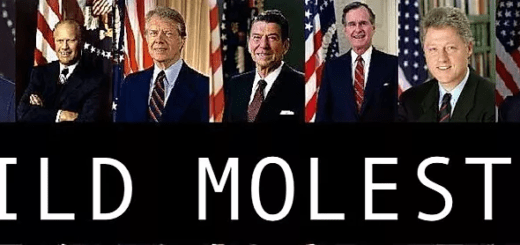
Who controlled the airspace, the funding, and the distribution? Tatum’s logs and conversations point to an internal network reaching the Vice President’s office, mediated through figures such as William Barr and Amiram Nir. Rodriguez coordinated field-level operations. Bush and Clinton ensured state-level cover and funding.
Drugs for weapons: the cocaine economy of the Contra war
The official narrative of the Contra insurgency emphasized ideological struggle. Tatum’s testimony and documentation reposition the war as a profit operation. Cocaine became the currency of allegiance. The CIA facilitated manufacturing by supplying equipment. The Medellin cartel provided raw material. The Contras managed production, overseen by CIA handlers and enforced by local military allies.
Seal explained the economics to Tatum in plain terms. One kilo of cocaine yielded upwards of $15,000 in U.S. markets. The Contras received $1,500 per kilo in weapons credit. The rest fueled black budgets and laundered political gains. Each delivery solidified a financial loop in which violence, addiction, and political control were mutually reinforcing.
Embedded within these missions were financial leaks. A 1985 meeting in Costa Rica, attended by Noriega, Barr, Rodriguez, Fernandez, Clinton (via sat-link), and Bush, centered on $100 million missing from the “Enterprise.” The Arkansas route—run by Seal and allegedly protected by Clinton’s team—was identified as the breach point. Discussions revealed that drugs flowed through Mena, Arkansas, where state-level authorities ensured cover and distribution.
Assassinations and internal purges
As operations scaled, so did threats from within. Ramon Navarro, originally an operative in the cocaine manufacturing chain, threatened to testify during Noriega’s trial. In 1991, Tatum was ordered to deliver a payoff and, if refused, execute Navarro. Navarro fled and died in a crash hours later, fulfilling the secondary order. Enrique Bermudez, the Contra commander overseeing cocaine kitchens, faced similar consequences after attempting political advancement. He died by a single gunshot to the head outside a Managua hotel.
These were not isolated acts. Tatum reveals an ongoing structure of purges targeting assets whose utility expired or whose ambitions diverged from centralized control. Death became a strategy for narrative maintenance. Mossad agent Amiram Nir, General Gustavo Alvarez, and Barry Seal followed the same trajectory.
The documents Tatum compiled across years—flight logs, mission briefs, intercepted communications—establish a chronology of these deaths in relation to operational exposure. He claims these were stored globally and served as his leverage when he refused a final order in 1992: the termination of an American citizen.
High-level complicity and operational immunity
Tatum names George H.W. Bush as his ultimate controller. Orders came through Colby and North, but the political assurance came from the Vice President. During missions, he transported figures like William Barr and Felix Rodriguez, engaged in debriefings with Amiram Nir, and heard conversations that outlined the hierarchy of decision-making. In a taped exchange between Buddy Young and Mike Harari, Young refers to “GOFUS”—Governor of the United States—as Clinton’s operational codename, suggesting centralized knowledge and protection within Arkansas.
In one operation, Tatum monitored a conversation in which Clinton’s team is described as managing drug shipments, political cleanup, and intelligence shredding from Mena. The implication: state governments and federal agencies formed a contiguous network to ensure operational continuity and legal invisibility.
The fallout: arrest and suppression
In 1996, after years of silence, Tatum prepared to publish his evidence. Federal authorities arrested him under fraud charges and invoked a mysterious treason charge, despite no documentation of such an indictment in official records. While detained, he faced demands to turn over his materials. FBI agents ransacked his property. The Secret Service warned him of life imprisonment or execution if he proceeded.
Yet Tatum had distributed his materials in advance. Documents included certified flight plans stored by a Honduran military official, returned to him in 1995. These files matched his original logs and substantiated his operational claims. Faced with incarceration and retaliation, Tatum released The Tatum Chronicles as both a defensive act and a historical record.
Why does this matter?
Because it reconstructs a concealed history of American foreign policy, rooted in the mechanics of covert operations. Tatum’s testimony compresses years of missions, shipments, and deaths into a sequence that exposes the infrastructure of the “Enterprise.” It challenges the separation between public service and criminal enterprise. It assigns agency, accountability, and purpose to actions obscured by political theater.
What did the cocaine fund? Who ordered the deaths of allies? How many missions concealed murder under the name of strategy? Tatum names people. He dates operations. He describes cargo, destinations, and conversations. The patterns converge on a single claim: the drug trade served U.S. political objectives, and the deaths ensured those objectives remained undisclosed.
The Tatum Chronicles does not theorize. It testifies. Tatum’s voice does not emerge from speculation or retrospective judgment. It moves within operational tempo, speaking from the cockpit, the hangar, the embassy briefing, the low-level flight under radar. The urgency of the narrative comes from its proximity to command. The crisis it presents is structural. Its proof is logistical. The names align with events. The missions build to consequence. The deaths follow confrontation. The suppression follows exposure. The pattern is not accidental. It is procedural. The state crafts its secrets. The operative becomes expendable. The record outlives the order.