In the high-stakes theater of global geopolitics, there is a war being fought that most news cameras are missing entirely. It is not a war measured by the number of missiles launched over the Strait of Hormuz or the tactical maneuvers of aircraft carriers in the Persian Gulf. Instead, it is the war for the narrative—the battle for the hearts and minds of those actually asked to pull the trigger and walk into the fire. By every available measure, that war has already been lost.
Recent reports from veteran military analysts, American military publications, and journalists with direct access to active-duty personnel suggest a crisis of confidence within the United States Armed Forces that has not been seen since the dark, final years of the Vietnam War. This is not the standard “grumbling” of a tired soldier; it is a documented, spreading wave of dissent regarding the purpose, legitimacy, and strategic viability of the conflict the Trump administration is currently pursuing against Iran.
The Failure of Meaning
Every seasoned military strategist understands that the first phase of any conflict is fought with meaning. A soldier who believes in the cause—who believes that their sacrifice serves the safety of their home or the preservation of a fundamental value—will endure unimaginable hardship. However, a soldier who views the mission as a political calculation or a service to a foreign power becomes a source of institutional instability.
For decades, the American military mythology was built on the pillars of defending freedom, democracy, and the homeland. While these justifications were often contested, they provided a functional structure of meaning. In the current conflict, that structure has utterly collapsed. Unlike the aftermath of September 11th or even the fabricated narrative of “weapons of mass destruction” in Iraq, the current administration has failed to provide a singular, resonant reason for American troops to die in the Iranian desert. The justifications have shifted like sand: from nuclear capabilities to the Strait of Hormuz, to regional security, and finally to vague hints of regime change. This incoherence has left the ranks asking a dangerous question: Why are we here?
Dissent in the Ranks: The “Meat Grinder”
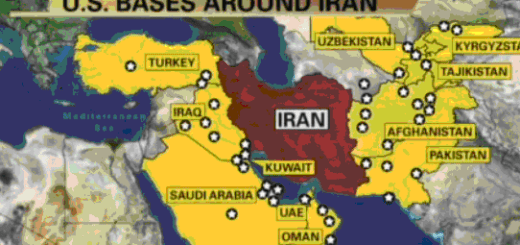
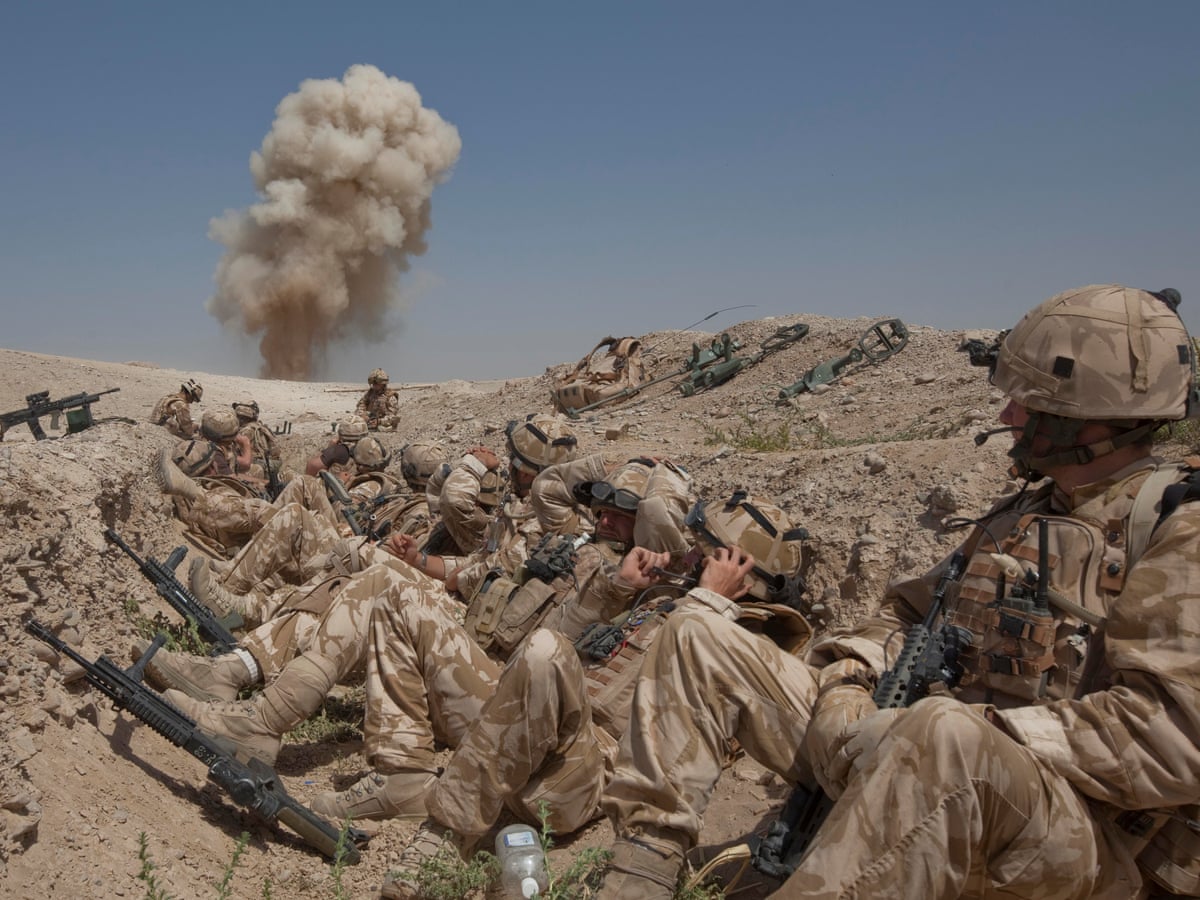
The reports emerging from within the military apparatus are harrowing. Approximately 4,500 Marines and naval personnel recently deployed to the Gulf are expressing what insiders describe as “fury.” This isn’t just fear of combat; it is an organized anger at being sent into what they themselves are calling a “meat grinder” without a clear definition of what victory looks like.
This sentiment is being amplified by a viral meme circulating on military social media pages. The image depicts an American soldier in tears, holding a photograph of what he is supposedly fighting for. Instead of a family or a flag, the photo features Donald Trump, Melania Trump, and the disgraced figures Jeffrey Epstein and Ghislaine Maxwell. The message is blunt: the troops feel their lives are being traded for political optics and the protection of an administration mired in its own scandals, rather than the defense of the United States.
Perhaps more concerning is that this dissent has climbed the chain of command. Senior commissioned officers, responsible for the lives of thousands, are privately describing the contemplated ground invasion of Iran as an “absolute disaster.” When leaders at this level allow such assessments to reach the public, it signals a qualitative break in the civil-military relationship. They are no longer just following orders; they are sounding a desperate alarm that the mission is operationally unwinable at an acceptable cost.
The Asymmetry of Motivation
As the conflict enters its second month, a terrifying asymmetry has emerged between the two sides. For Iran, this war is existential. Their soldiers and militias believe they are fighting for the very survival of their nation, their religion, and their homes. They look at the ruins of Iraq and Libya and conclude that defeat is not an option.
On the American side, the soldiers themselves are calling this “someone else’s war.” They see the aircraft losses, the base destructions, and the skyrocketing energy prices hitting American families at home. They see a $100 billion funding request that will likely be diverted from domestic social programs. Most pointedly, they see a conflict that serves Israeli strategic objectives far more clearly than it serves American ones. This gap in motivation cannot be fixed by better PR or “information operations.” It is a fundamental difference in what is at stake.
A Strategy of Bluffs and Purges
The administration’s handling of the conflict has only exacerbated the internal crisis. President Trump’s recent call to an Israeli television channel, where he promised the “total annihilation” of Iran while simultaneously complaining that NATO allies weren’t helping, showcased a profound strategic incoherence. NATO members like France, Germany, and Italy have not only refused military support but have actively distanced themselves from a war they were never consulted on.
The 48-hour ultimatum issued to Iran served as a turning point for military morale. When the ultimatum expired and the promised destruction of Iranian infrastructure did not occur on the scale suggested, the administration’s credibility took a massive hit. It became clear that the gap between the President’s rhetoric and the military’s actual operational capacity was cavernous. Advisers reportedly had to admit that such a strike was not operationally achievable and would lead to a global economic catastrophe that the U.S. was not prepared to handle.
In response to this pushback, the administration has begun purging senior officers who do not show enough “enthusiasm” for the mission. Replacing experienced wartime leadership with political loyalists is a move that historically precedes military disaster. A military managed for “optics” rather than “capability” is a military that is being set up for failure on the battlefield.
The Final Verdict
The Trump administration assumed that military action would eventually generate its own justification—that a “win” would make the “why” irrelevant. They were wrong. A democracy cannot sustain an expensive, unpopular, and undefined conflict indefinitely, especially when the soldiers tasked with fighting it no longer believe in the people sending them.
The war for the narrative was the first battle of this conflict, and it was lost before the troops even hit the ground. Without a story to believe in, the American military is facing a psychological breaking point. History has shown us what happens when a Great Power loses the “why” of a war; the “how” usually ends in tragedy. As the administration pushes closer to a ground invasion, they are not just fighting the Iranian military—they are fighting the growing realization among their own soldiers that this is a sacrifice they are no longer willing to mak