The Poisoning of An Entire Town By PG & E & The Aftermath (Imperfect Clean Up & LESS REGULATION of Curbing C6 in Drinking Water!)

Erin Brockovich was born in 1960. Married young. Divorced twice by age 30. Three kids to feed. No college degree. Worked whatever jobs she could find. Retail. Waitress. Anything that paid.
1991 she needed work bad. Got hired as a file clerk. Law office in California. Masry and Vititoe. She answered phones. Filed papers. Made copies. Barely making rent.
1993 her boss handed her a file. Real estate case. Woman trying to sell her house in some desert town. File had medical records in it. Erin thought that was weird. Why would a house sale need medical records?
She started reading. Found more files. Same town. Hinkley. Tiny place in the desert. All had medical records. Cancer. Tumors. Miscarriages. Way too many for such a small place.
Erin started making calls. Talked to people in Hinkley. Everyone had the same story. Someone in their family had cancer. Or died young. Or couldn’t have babies. The whole town was sick.
Then Erin found letters from Pacific Gas and Electric. PG and E. Big power company. They had a gas station in Hinkley. The letters said they were testing the water. Making sure it was safe. Even offered free well testing. How thoughtful.
But something was off. The letters mentioned chromium in the water. Said it was chromium 3. Totally safe. Good for you even. Nothing to worry about.
Erin wasn’t a scientist. But she went to the library. Read everything about chromium. Found out there were two types. Chromium 3 was harmless. Chromium 6 killed people. Caused cancer. Destroyed organs.
She dug deeper into PG and E documents. Found internal memos. Engineers talking to each other. They knew it was chromium 6. Not chromium 3. They’d been lying to everyone.
1952 to 1966. Fourteen years straight. PG and E used chromium 6 in their cooling towers. Stopped equipment from rusting. The wastewater went into ponds. No lining. Nothing to stop it. Just open dirt ponds.
The poison seeped into groundwater. 370 million gallons total. Went straight into the water Hinkley residents drank. Every single day. For decades.
Company engineers knew in 1965. Wrote memos about it. Managers told them shut up. Hide the documents. Keep it secret. Tell the town everything was fine.
Nobody said anything for 30 more years. People kept drinking poison. Kept getting cancer. Kept dying. PG and E kept lying.
Erin drove to Hinkley. Started knocking on doors. Talked to families face to face. Woman with breast cancer at 30. Man with brain tumor at 40. Couple lost three babies to miscarriages. Kids with constant nosebleeds.
She asked them all the same question. Want to sue? Over 600 people said yes.
PG and E brought in their lawyers. Expensive ones. Lots of them. Argued the chromium was safe. Said the cancer was coincidence. Blamed smoking. Blamed diet. Blamed anything except their poison.
The case went to arbitration. First 40 cases got heard. Awards came back. 120 million dollars total. About three million per person.
PG and E did the math. 600 people times three million each. Over a billion dollars. They couldn’t risk losing that much.
July 2, 1996. PG and E settled. 333 million dollars. Largest direct action lawsuit settlement in United States history at that time.
650 people split the money. Sick people got more. Cancer patients got more. Depended on how bad you were. How much proof you had.
Erin got 2.5 million. The law firm gave it to her as a bonus. She’d done everything. Found the case. Signed up the clients. Built the evidence.
Four years later Hollywood called. Wanted to make a movie. Called it Erin Brockovich. Julia Roberts played her. Movie came out in 2000. Box office smash.
Julia Roberts won the Oscar for Best Actress in 2001. Suddenly millions of people knew about Hinkley. Knew about chromium 6. Knew about PG and E lying.
Environmental groups started testing water everywhere. Found chromium 6 in tap water across America. Over 200 million people drinking it. Coast to coast.
Back in Hinkley things got worse. PG and E started buying houses. Offered residents money to leave. Said they needed to clean up. Asked people to move out.
Most people sold. Took the cash. Left town. PG and E bulldozed the houses afterward. Didn’t want squatters moving in.
By 2016 Hinkley was dying. Population dropped from 2000 to 300. Most houses gone. Just empty dirt lots. Boarded buildings. Ghost town.
The water is still poisoned today. PG and E spent over 750 million on cleanup. Still not finished. Won’t be done for another 40 years. Maybe longer.
They pump chemicals underground. Try converting chromium 6 to chromium 3. Super slow process. Barely working.
People who stayed can’t drink their water. Buy bottled water. Use expensive filters. Some just left anyway.
Property values crashed. Houses worth 800 thousand in 2012 worth 32 thousand now. Nobody wants to buy there. Town is basically dead.
Think about what Erin did. Single mom. Three kids. No college. No law degree. Making minimum wage filing papers.
She found weird medical records. Got curious. Started asking questions. Figured out a 40 year coverup. Billion dollar company hiding poison.
PG and E had armies of lawyers. Unlimited money. Political power. They’d hidden it since 1952. Nobody caught them for decades.
One file clerk figured it out. Knocked on doors. Built a case. Won 333 million. Largest settlement ever at the time.
Made chromium 6 a national issue. Forced water testing nationwide. Inspired an Oscar winning movie. Changed environmental law forever.
And Hinkley? The town PG and E poisoned? Gone. Ghost town. Houses bulldozed. Families scattered. Water still toxic three decades after the lawsuit.
Erin is still fighting today. Still investigating contaminated water. Still helping communities. Still exposing corporate lies. That 2.5 million let her keep going. Keep working. Keep fighting for people nobody else will fight for.
File clerk became an environmental hero. Exposed corporate criminals. Won record money. Got an Oscar made about her. Still protecting people 30 years later.
~Weird but True
Comment:  I bet these huge corporations paid off this judge to get a favorable ruling meaning the drinking water in California is more poisoned than ever as there seem to be no limits as to how much pollution PG & E and others can now get away with!  (A judge in May scrapped a California regulation set in 2014 for hexavalent chromium )

Hinkley, California: The Chromium-6 Contamination That Inspired Erin Brockovich

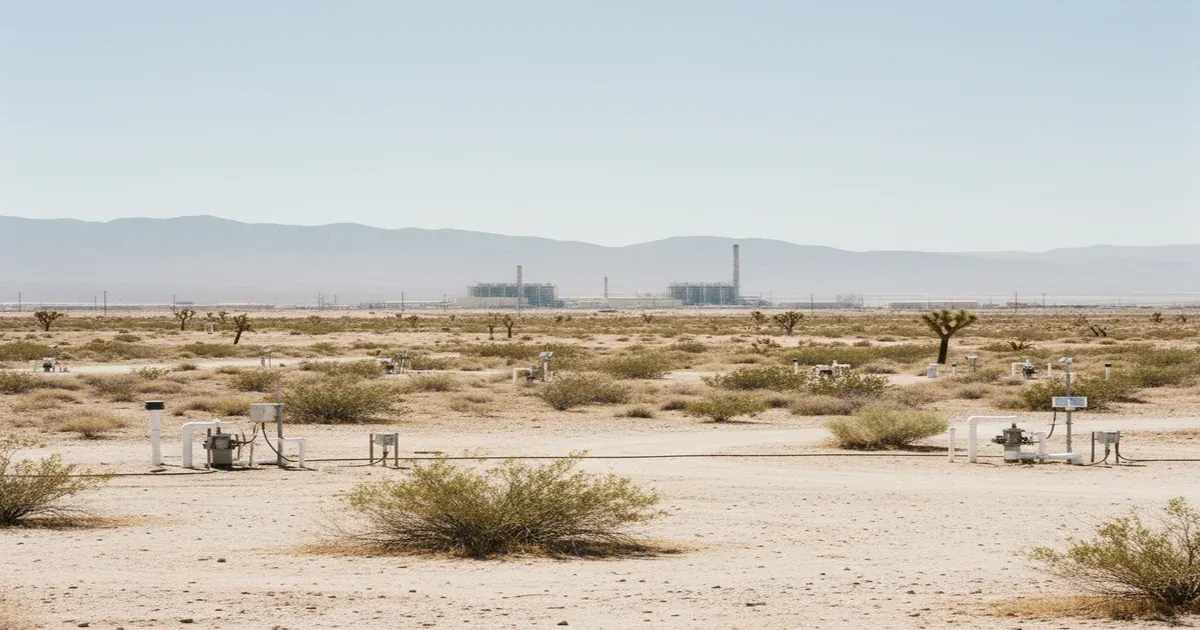
Mojave Desert landscape near Hinkley, California

If you’ve seen the movie, you know the broad strokes. But the real story of Hinkley, California’s groundwater contamination is more complicated, more tragic, and more relevant to current water quality debates than most people realize. Decades after the headline-grabbing settlement, the contamination plume still hasn’t been fully remediated — and the town itself has largely disappeared.

What Happened

From 1952 to 1966, Pacific Gas and Electric Company (PG&E) operated a compressor station near the small desert community of Hinkley, about 120 miles north-northeast of Los Angeles in the Mojave Desert. The station was part of PG&E’s trans-California natural gas transmission system — a massive network of pipelines serving over 4 million customers.

At the Hinkley station, PG&E used hexavalent chromium (chromium-6) as a rust inhibitor in cooling towers. It’s cheap, effective, and profoundly toxic. Hexavalent chromium compounds are classified as genotoxic carcinogens — they damage DNA and cause cancer.

The contaminated wastewater was dumped into unlined spreading ponds adjacent to the station. Over 14 years, approximately 370 million gallons of chromium-tainted water soaked directly into the ground and migrated into the local aquifer. PG&E didn’t inform the local water board about the contamination until December 1987 — more than two decades after the dumping stopped.

The Erin Brockovich Case

In 1993, Erin Brockovich, a legal clerk working for attorney Edward Masry, began investigating an apparent cluster of illnesses among Hinkley residents. What she uncovered connected those health problems to the hexavalent chromium in the groundwater.

The resulting class action lawsuit — Anderson et al. v. Pacific Gas and Electric — was filed in San Bernardino County Superior Court. After arbitration for the first 40 plaintiffs resulted in roughly $120 million in damages, PG&E reassessed its position and decided to settle the entire case. In 1996, the company agreed to pay $333 million — at the time, the largest class action settlement in U.S. history, covering more than 600 plaintiffs.

PG&E settled the final Hinkley-related cases in 2008.

What’s Left of Hinkley

The settlement money didn’t save the town. PG&E began buying up properties near the contamination plume, and residents steadily left. By 2016, The New York Times described Hinkley as having slowly become a ghost town. The school closed. Businesses shuttered. What was once a small but functioning desert community essentially ceased to exist.

The contamination plume, meanwhile, has proven stubbornly difficult to clean up. PG&E has been required to conduct ongoing remediation, including groundwater extraction and treatment. But chromium-6 is persistent in desert aquifer conditions, and the plume extended across a wide area beneath the desert floor.

Why Chromium-6 Matters Beyond Hinkley

Hexavalent chromium isn’t just a Hinkley problem. It occurs naturally in some geological formations and is used in industrial processes across the country. The EPA’s current federal drinking water standard covers total chromium at 100 parts per billion, but doesn’t have a separate standard specifically for the hexavalent form — which is far more toxic than trivalent chromium (chromium-3).

California set its own chromium-6 standard at 10 ppb in 2014, though it was later withdrawn due to a legal challenge over the economic feasibility analysis. The state has been working on a revised standard, but as of 2026, the regulatory picture remains in flux.

The Environmental Working Group’s tap water database has identified chromium-6 in the drinking water of thousands of communities across the United States, often at levels that some scientists consider harmful even if they’re below the federal total chromium limit.

What Hinkley Residents and Neighbors Should Know

If you live in the Hinkley area or elsewhere in the Mojave Desert region where private wells tap into local aquifers, water testing is essential:

  • Test for total chromium and hexavalent chromium specifically. Standard water panels don’t always break out chromium-6 separately. Ask the lab to test for it.
  • Know your well depth and aquifer. Shallow wells near industrial sites or natural chromium-bearing geology are at higher risk.
  • Consider reverse osmosis. RO systems are effective at removing hexavalent chromium from drinking water. Whole-house systems provide comprehensive protection.
  • Check for other desert contaminants. Arsenic, uranium, and fluoride are also naturally elevated in many Mojave Desert groundwater sources.

If you’re concerned about your water quality, a certified water treatment professional can test your water and advise on solutions specific to your area’s geology and contamination risks.

Lessons From Hinkley

Hinkley’s story is a cautionary tale about corporate accountability, regulatory delay, and the limits of legal settlements. The residents got their money — or some of it, after legal fees — but they lost their community. The groundwater still isn’t clean. And the broader regulatory failure around chromium-6 means that millions of Americans may be drinking water with elevated levels of a known carcinogen without any federal standard specifically addressing it.

The contamination happened between 1952 and 1966. The company didn’t disclose it until 1987. The lawsuit settled in 1996. The town is essentially gone. And the cleanup continues. That timeline tells you everything you need to know about how slowly environmental contamination gets addressed in this country.


Current Ownership of PG & E
PG&E is primarily owned by institutional investors, with Vanguard Group and BlackRock among the largest shareholders.

Pacific Gas and Electric Company (PG&E) operates as subsidiary of PG&E Corporationpublicly traded holding company listed on the NYSE under the ticker PCG. The company’s ownership is largely distributed among institutional investors, insiders, and retail shareholdersAs of early 2026, approximately 62.95% of PG&E shares are held by institutional investors0.18% by company insiders, and 36.87% by retail investors. 

Multiple Settlements in Nearby Locales:

PG&E settled again in 2006 for $295 million with a new group of 1,100 residents from Hinkley and other towns, including the Kettleman Hills, where PG&E also has a compressor station. The company also apologized for the pollution. “Clearly, this situation should never have happened, and we are sorry that it did,” the company said in a statement at the time.

Two years later, a final case was settled for $20 million after 104 more people claimed exposure to the toxic water.

In the town ‘Erin Brockovich’ made famous, residents still fear dirty water

Wikipedia

Major Institutional Shareholders

The largest institutional shareholders include:

Insider Ownership

Mutual Fund Holdings

Summary

You may also like...