The Unpublicized Crisis of Microchip Shortage & Toyota Manufacturing


 |
[This article, first published by Global Research, consists in an overview of the semiconductor crisis which commenced in 2020, followed by a review of Taiwan’s powerful semiconductor manufacturing conglomerate (TSMC) which is involved in production in Taiwan, the PRC and as well as the U.S.]
“Where Are the Strategic Microchips?”
From one day to the next starting in 2020, Japan’s automobile industry entered a period of prolonged crisis.
The automobile industry experienced a decline in production of 15% in 2020 largely due to an engineered shortage of semi-conductor microchips. A much larger decline was experienced in 2021, affecting production in Japan, South Korea, China Western Europe and North America. The impacts were devastating. The media remained silent. The semiconductors “crunch” coincided with the onslaught of the 2020-23 Covid crisis.
“Automakers, which rely on dozens of chips to build a single vehicle, have been particularly hard hit, forced to halt production lines globally as they await chip supplies. The debacle is likely to cost the auto industry $450 billion in global sales … In September 2021 Toyota was forced to slash production at 14 factories in Japan over a lack of semiconductor chips. Some of the cuts will continue into October due to a lack of components from Southeast Asia, Toyota has said.” (Washington Post, September 2021)
All automobile companies were affected:
Across the entire industry, an estimated 7.7 million fewer vehicles were produced in the same year-on-year period. This corresponds to a monetary value of about 210 million USD. Due to the complexity of the production chains described above, it will take time even after production capacities have recovered until output in the automotive industry is at pre-crisis level once again.
The impacts on automobile sales at the retail level were devastating, conducive to numerous bankruptcies. No questions asked.
 |
[Image: No New Vehicles on Sale at Major Automobile Distributor, Montreal, February 21, 2021]
The Taiwan Semiconductor Manufacturing Company (TSMC)
The world’s largest semiconductor producer –which over the years has been routinely trading and collaborating with China– is Taiwan Semiconductor Manufacturing Company (TSMC).
 |
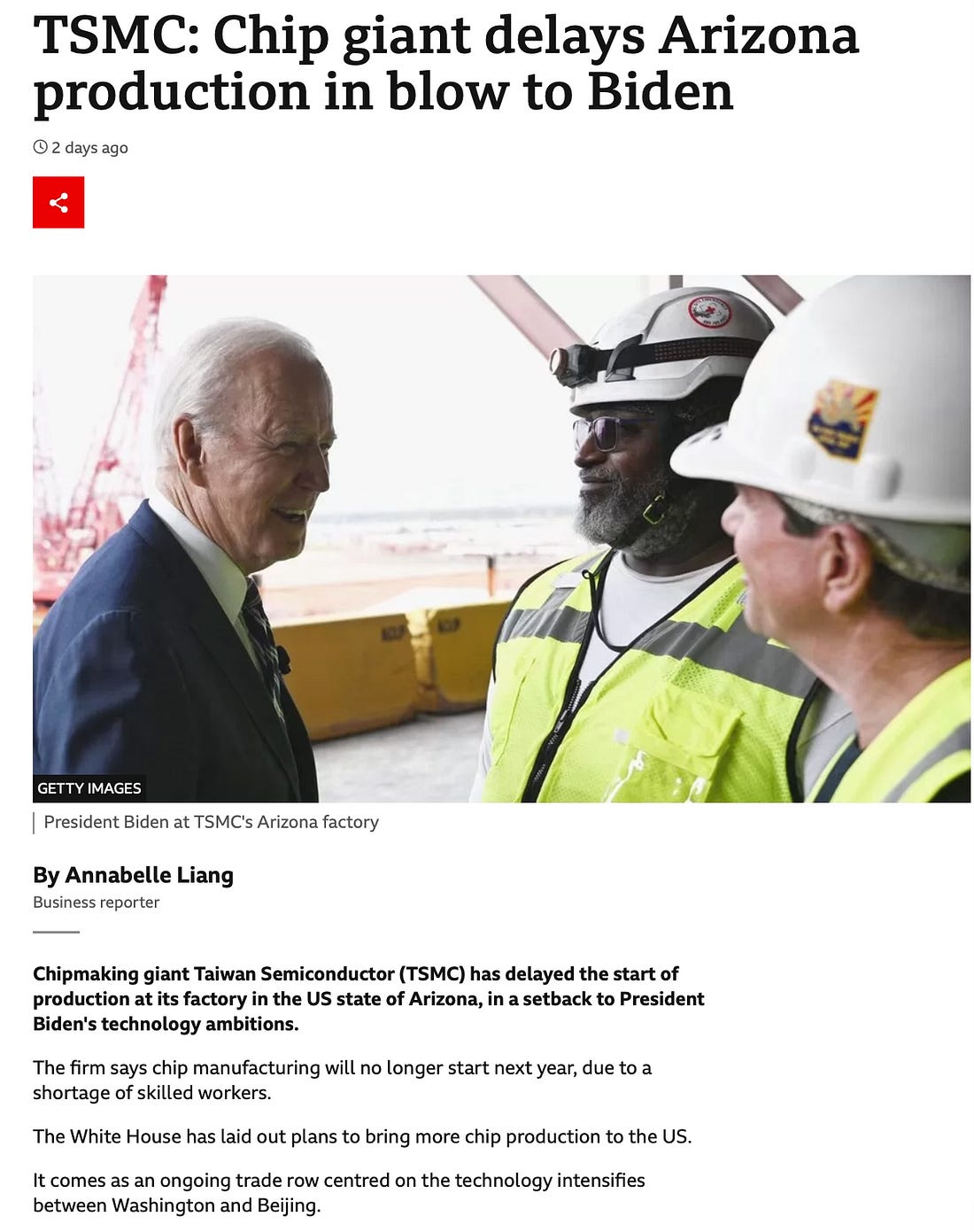
Joe Biden’s intent was to paralyze Taiwan’s trade and investment relations with the PRC. In what amounts to a strategic decision, Washington ordered Taipei to implement the relocation of the TSMC to Arizona.
According to the NYT: (February 22, 2023)
Taiwan Semiconductor Manufacturing Company, the world’s biggest maker of advanced computer chips, is upgrading and expanding a new factory in Arizona that promises to help move the United States toward a more self-reliant technological future.
As the biggest maker of chips that power everything from phones to cars to missiles, the company is strategically important with highly coveted technical know-how. But caught in a deepening battle between the United States and China over technological leadership
There was also an unspoken battle between the Biden Administration and the Taiwan owners of TSMC which started manufacturing in mainland China in 2004.
“Two out of 18 TSMC plants are located in China — the vast majority of the factories are still in Taiwan.”
 |
TSMC is not intent upon reducing its activities in mainland China.
This was conveyed to the Biden Administration.
Joe Biden’s decision to transfer TSMC to Arizona had essentially led to the paralysis of the Arizona plant which was slated to start production in 2025, while also destabilizing TSMC’s revenues and productive capabilities in Taiwan.
Has this contributed to weakening TSMC’s relations with the PRC? Doubtful. Visibly Biden mishandled Washington’s relationship with TSMC.
Worldwide Shortage of Microchips. Why?
“the world chip shortage has already affected 169 industries, and we’re not talking about electronics anymore. Industries like steel and concrete production and even soap manufacturing are already affected”.
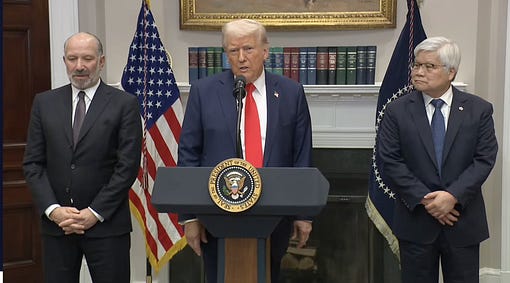
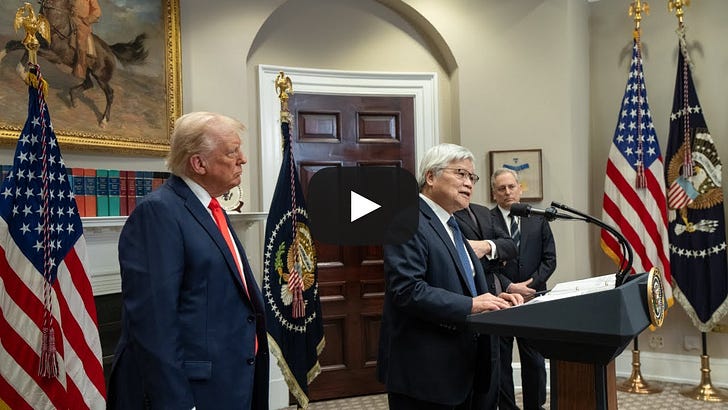
In recent developments, President Trump has exerted both pressure and diplomacy in his meetings with the of TSMC.
The president of and chairman of the TSMC is Dr. Che-Chia Wei 魏哲家. (C.C. Wei)
C. C. Wei has a PhD from Yale University. He previously worked for Texas Instruments. He is categorized by Time Magazine as one of the most influential people worldwide. He has the unbending support of President Donald Trump.
He became TSMC CEO in 2018 and succeeded Mark Liu 劉德音as chairman in June 2024.
It would appear that The TSMC Arizona Plant is currently (under the Trump Adminstration) fully operational.
“As of April 2025, TSMC’s wafer fabrication complex in Phoenix, Arizona has emerged as a focal point of the global semiconductor industry.
With a total investment of $165 billion, this expansion represents one of the largest foreign direct investments in U.S. history, symbolizing TSMC’s strategic shift in response to geopolitics, technological sovereignty, and supply chain restructuring.”
***
TSMC Chairman Che-Chia Wei Meets President Donald Trump at the White House
You’re currently a free subscriber to Michel Chossudovsky. For the full experience, upgrade your subscription.